Germination is the stage where most first grows go wrong. Not because it is complicated -- it is not. It goes wrong because growers overthink it, overwater it, and check it too often.
Seeds have been sprouting without help for a very long time. Your job is to set the right conditions and then leave them alone.
What Cannabis Seeds Need to Germinate
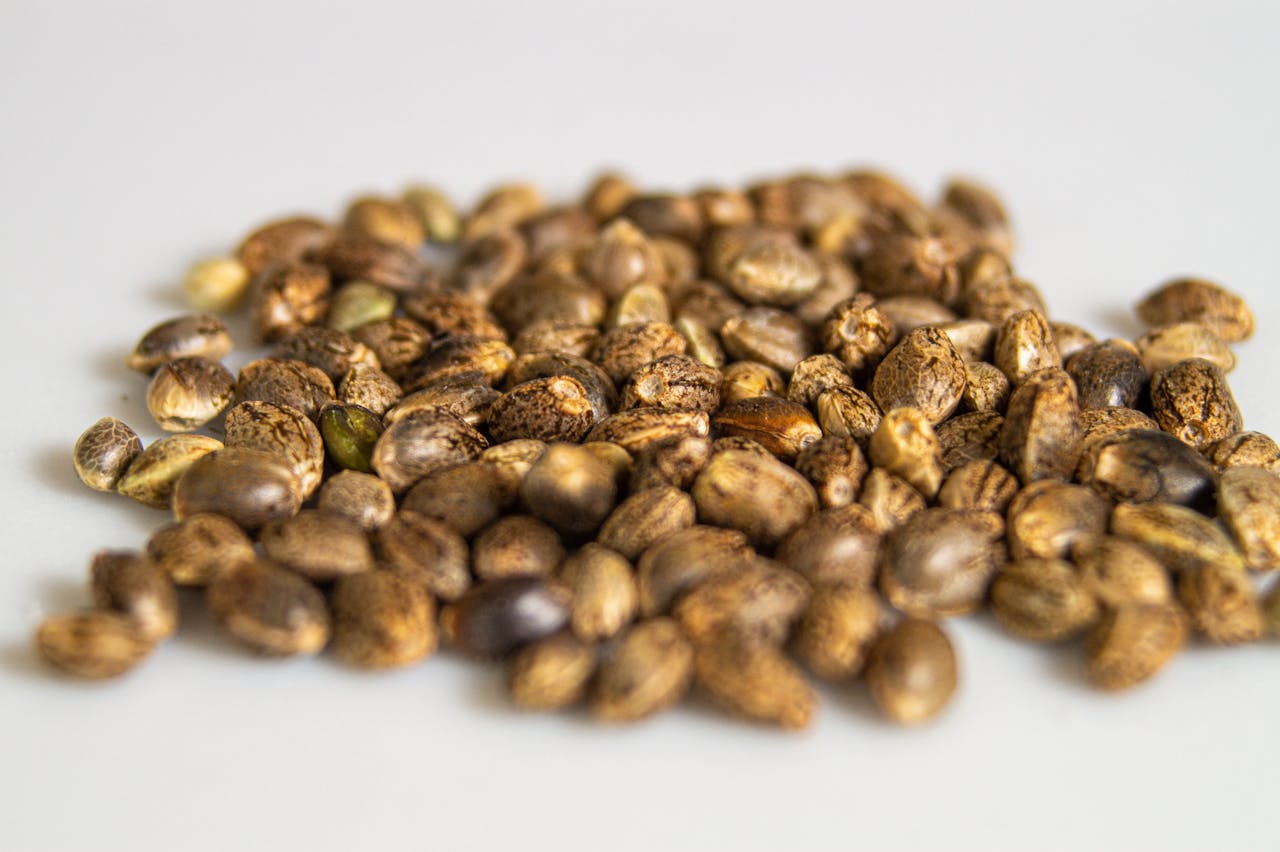
Cannabis seeds need three things to germinate: moisture, warmth, and darkness. Nothing else. No nutrients, no light, no special equipment.
Moisture signals to the seed that growing conditions are right. The seed coat softens, the embryo inside activates, and the taproot begins to push out. Too little moisture slows things down. Too much moisture -- and this is the mistake most beginners make -- drowns the embryo or promotes mold.
Warmth speeds up the biological process inside the seed. The target range is 70-85 degrees F (21-29 degrees C). Below 65 degrees F slows germination significantly. Above 90 degrees F risks damaging the embryo. If your grow space cools down at night, a seedling heat mat set to the lower end of that range removes the variable entirely.
Darkness keeps the environment stable and signals to the seed that it is underground, which is where germination is meant to happen.
The Paper Towel Method, Step by Step
The paper towel method is popular because it lets you see progress without disturbing the seed. Wet the towel to damp but not dripping, enclose the seeds, keep at 75-80 degrees F, and check every 24 hours.
- Take a paper towel and run it under water. Wring it out firmly until it no longer drips. Lay it flat.
- Place your seeds on one half of the towel, spaced at least 2cm apart.
- Fold the other half of the towel over the seeds.
- Place the folded towel in a sealed zip-lock bag or between two plates to retain moisture.
- Put it somewhere warm and dark: top of a refrigerator, inside a cupboard near a heat source, or on a seedling mat.
- Check every 12-24 hours. Do not leave it more than 48 hours without checking.
- Once the taproot reaches 1-2cm (about half an inch), transfer immediately.
When transferring: handle the seed body only. Never touch the taproot with bare fingers. Natural oils and physical pressure can damage it. Use clean tweezers if you need to. Plant root-down, about 1cm deep, in a pre-moistened growing medium.
Pro Tip: Some growers pre-soak seeds in plain pH-adjusted water (6.0-6.5) for 12-18 hours before the paper towel step. This softens the seed coat and can speed germination for older or harder-shelled seeds. Skip this for fresh seeds from a reputable source -- they will germ fine without it.
Other Methods: Direct Soil and Water Glass
Direct soil germination skips the taproot transfer step, which reduces handling risk. The water glass method is useful for older or stubborn seeds with hard shells. Both work -- the paper towel method is simply the most observable.
| Method | How It Works | Best For | Main Risk |
|---|---|---|---|
| Paper towel | Seeds in damp towel, warm dark place | Most growers; lets you monitor progress | Taproot damage during transfer |
| Direct soil | Plant seed 1cm deep in pre-moistened medium | Growers who want to minimize handling | Cannot monitor progress; moisture harder to manage |
| Water glass | Seeds soaked in room-temp water 12-24 hours, then transferred | Older seeds with hard coats | Over-soaking beyond 32 hours can suffocate embryo |
Direct soil: Pre-moisten your growing medium so it feels like a firmly wrung-out sponge. Make a small hole about 1cm deep. Drop the seed in, pointed end down if visible. Cover lightly. Do not pack it down. Cover with a humidity dome and keep in a warm location. The seedling should break the surface in 2-5 days.
Water glass: Fill a small glass with room-temperature water. Drop seeds in. They float initially, then sink as they absorb water. 12-24 hours is enough for most seeds. Do not soak longer than 32 hours. The embryo needs oxygen, and prolonged submersion can suffocate it. After soaking, transfer directly to paper towel or soil.
The Mistakes That Kill Seeds Before They Start
Most germination failures come from three causes: too much moisture, inconsistent temperature, and rough handling of the taproot. Each one is preventable.
- Overwatering: A waterlogged paper towel or growing medium prevents oxygen from reaching the embryo. The towel should feel moist, not wet. When you pick it up, it should not drip.
- Temperature swings: Consistent warmth matters more than exact temperature. A spot that is 78 degrees F in the afternoon and 60 degrees F at night will stall many seeds. Heat mats with thermostats remove this variable.
- Touching the taproot: The taproot is fragile. Always handle by the seed body. Use clean tweezers for the transfer step.
- Planting too deep: Seeds planted deeper than 1.5cm have to push through more medium to reach light. Stay at 1cm.
- Impatience: A fresh, healthy seed in good conditions germinates in 24-72 hours. An older seed can take 5-7 days. If conditions are right, give it a full week before assuming failure.
Reality Check: If a seed does not germinate after 7 days in ideal conditions, it is probably not viable. Gold Hill stores seeds in controlled conditions and tests viability before shipping. But any source will occasionally have a dud. If you experience consistent germination failure across a batch, contact us directly -- we stand behind the genetics we carry.
What Happens After the Seedling Emerges
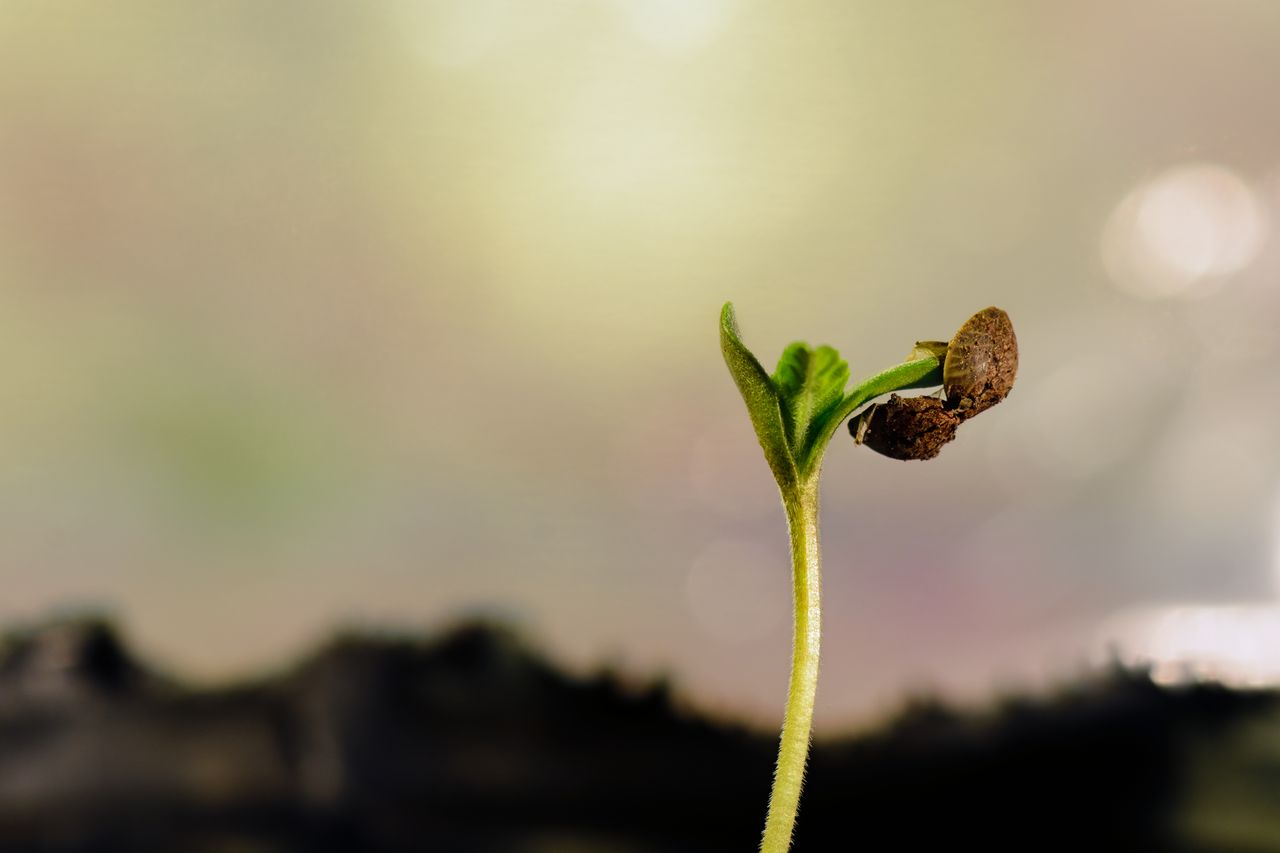
Once your taproot is planted and the seedling breaks the surface, the focus shifts to light, moisture management, and patience. The seedling stage is the next stress point after germination.
- Get it under light immediately. Seedlings that stretch for light get leggy and weak. A low-intensity LED or fluorescent at 18/6 is standard for the first 2 weeks.
- Water in small amounts around the base of the plant. The roots are small and concentrated near the stem. Saturating the whole container sets up root rot.
- Use a humidity dome for the first 5-7 days to hold humidity at 70-80% RH while the seedling establishes. Remove it gradually once the plant shows strong early growth.
- Do not add nutrients in the first 2 weeks. Most starter soils have enough pre-loaded nutrition for the seedling stage. Adding more causes nutrient burn in a plant with almost no root system to buffer it.
Set the Right Conditions, Then Step Back
Germination is the easiest stage to overthink. The seeds want to sprout. Give them the right conditions -- damp, warm, dark -- handle the taproot carefully when the time comes, and then leave them alone. Most problems come from doing too much, not too little.
Gold Hill ships seeds in protective packaging. If you have a germination issue with any seed from our catalog, contact us. Browse all seeds or run the yield calculator to plan your next grow before you order.